

.png)
Gynecologic cancers, including endometrial and ovarian cancers, remain areas of high unmet need. Advances in targeted therapy, immunotherapy, antibody-drug conjugates (ADCs), and combination strategies are exciting treatment options, yet tumor heterogeneity and resistance continue to limit significant advancements.
Effective preclinical development depends on models that represent distinct tumor biology and therapeutic challenges. TD2 offers a diverse portfolio of human and syngeneic in vivo models to evaluate antitumor activity, biomarker expression, mechanism of action and immune response changes across all therapeutic modalities.
AN3CA: A PTEN-Deficient Endometrial Cancer Model
AN3CA is a human endometrial adenocarcinoma cell line established from a lymph node metastasis of a 55-year-old woman with endometrial cancer. The model is characterized by loss of PTEN protein and alterations in the PI3K pathway, including a PIK3R1 mutation, with increased AKT phosphorylation. This molecular profile makes AN3CA particularly relevant for evaluating therapies targeting the PI3K/AKT/mTOR pathway, such as Rapamycin.
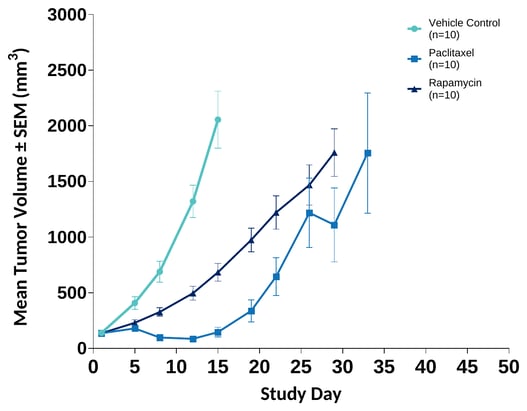
Mean Tumor Volume: Subcutaneous AN3CA Human Endometrial Carcinoma in Female Nude Mice
HEC-1-A: A Complementary Endometrial Cancer Model
HEC-1-A provides a genetically distinct endometrial cancer background for evaluating therapeutic activity across different oncogenic drivers. As reported in the literature, the model harbors KRAS G12D and PIK3CA G1049R mutations, providing a rationale for investigating therapies directed toward the RAS/MAPK and PI3K signaling pathways.
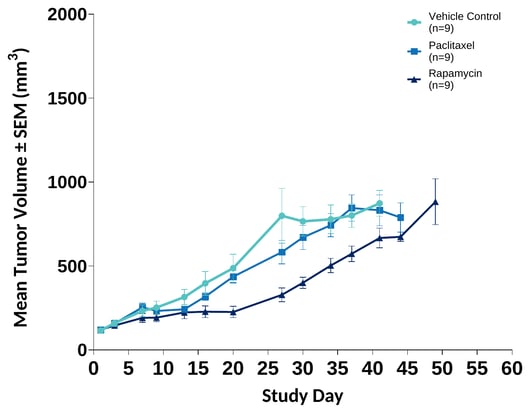
Mean Tumor Volume: Subcutaneous HEC-1-A Human Endometrial Carcinoma in Female Nude Mice
ID8-Luc: An Immunocompetent Model for Ovarian Cancer Immunotherapy
ID8-Luc is a luciferase-expressing murine ovarian cancer model derived from C57BL/6 ovarian surface epithelial cells. Intraperitoneal implantation of ID8-Luc develops disseminated peritoneal tumors and ascites that can be monitored longitudinally using bioluminescence imaging and ascites collection for flow cytometry assessment. As a reported “colder” tumor, the ID8-Luc model is particularly well suited for evaluating next generation immunotherapies, and combination strategies.
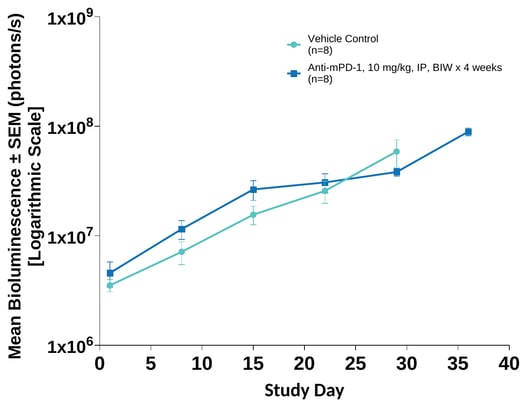
Mean Bioluminescence Signal: Intraperitoneal ID8-Luc Murine Ovarian Carcinoma in Female C57BL/6 Mice
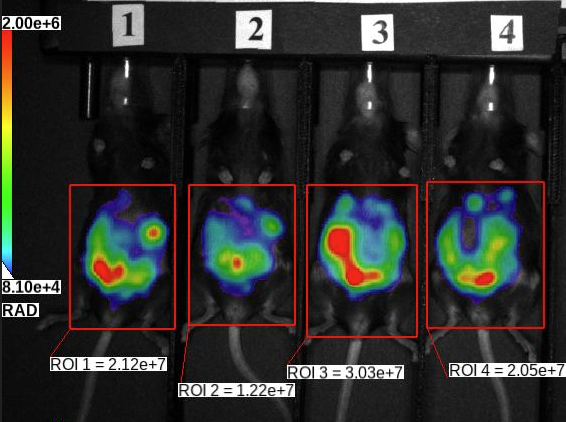
Group 1: Vehicle Control
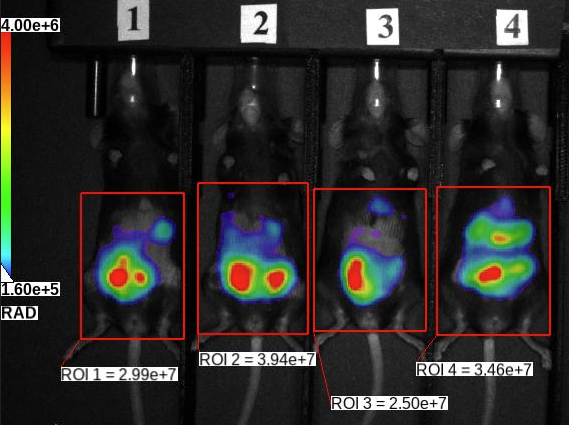
Group 2: Anti-mPD-1 10mg/kg
Representative Images Day 15: Intraperitoneal ID8-Luc Murine Ovarian Carcinoma in Female C57BL/6 Mice
Future Directions
As gynecologic cancer drug development advances, robust preclinical models remain essential for identifying responsive tumor populations, understanding resistance, and prioritizing rational combination strategies.
TD2’s gynecologic cancer model portfolio supports evaluation of emerging therapies across multiple tumor backgrounds, with opportunities to incorporate longitudinal imaging, pharmacodynamic biomarkers, and immune profiling into study designs.
By integrating complementary models into your discovery and translational programs, TD2 helps advance promising gynecologic cancer therapies from preclinical development toward clinical investigation.