
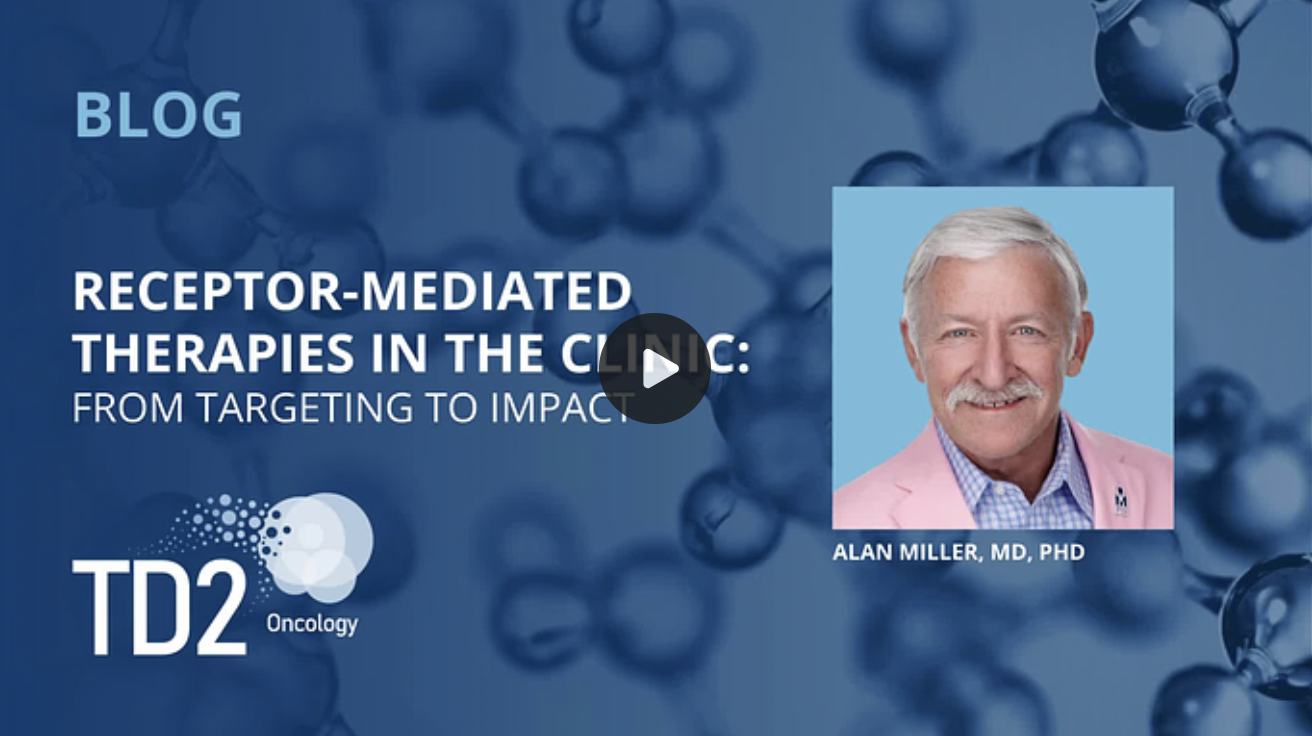
Receptor mediated therapies have fundamentally changed how cancer is treated in the clinic. What began with early monoclonal antibodies has expanded into a diverse landscape of modalities designed to engage cell surface receptors with increasing precision. Today, these therapies are not only improving outcomes but also reshaping expectations for how mechanism translates into clinical benefit.
At the core of receptor mediated therapy is a simple principle. By targeting receptors expressed on cancer cells or immune cells, therapies can selectively engage disease biology while limiting off target effects. In practice, this concept has given rise to a wide range of clinical approaches, each leveraging receptor biology in a distinct way.
Monoclonal antibodies were among the earliest successes, demonstrating that direct receptor targeting could deliver meaningful benefit. Agents like rituximab and trastuzumab showed that blocking signaling pathways or recruiting immune effector functions could slow or eliminate tumor growth. These early therapies laid the groundwork for more complex designs.
From there, innovation accelerated. Antibody drug conjugates and radioligand conjugates added payload delivery to receptor targeting, using internalization and trafficking to bring cytotoxic agents or radiation directly into tumor cells. Clinical outcomes increasingly depended not only on receptor expression, but also on factors like internalization rate, lysosomal processing, and tissue biodistribution.
Bispecific and trispecific antibodies further expanded the clinical toolkit by engaging multiple targets simultaneously. These therapies often bring immune cells into close proximity with tumor cells, creating potent and highly specific anti tumor responses. While promising, they also introduce new clinical considerations around dosing, safety, and immune activation.
Cell based therapies such as CAR-T and T-cell receptor therapies represent another major shift. These approaches rely on engineered receptors expressed on immune cells, allowing the patient’s own immune system to recognize and attack cancer. Early clinical success in hematologic malignancies has driven rapid expansion into new targets and tumor types.
Looking ahead, emerging trends are pushing receptor mediated therapies even further. In vivo CAR-T approaches aim to eliminate complex manufacturing steps by modifying immune cells directly within the patient. Off the shelf allogeneic cell therapies promise greater accessibility and faster treatment timelines. Theranostic pairs in radiopharmaceutical development are linking diagnosis and treatment through shared receptor targets, enabling more personalized care.
As this landscape grows more complex, clinical development strategies must evolve. Trial design, biomarker selection, and patient monitoring increasingly depend on understanding receptor biology beyond surface expression alone. Mechanism driven data is becoming essential for interpreting response, managing risk, and making informed decisions early in development.
Receptor mediated therapies are no longer a single category of drugs. They represent a broad and rapidly advancing clinical ecosystem. For developers and clinicians alike, the challenge is not whether these therapies will shape the future of oncology, but how best to harness their full potential.
To explore how these modalities are being evaluated, optimized, and translated from mechanism to clinical impact, we dive deeper into this topic in our recent webinar. The on demand session expands on these clinical approaches and the translational tools that support them.