

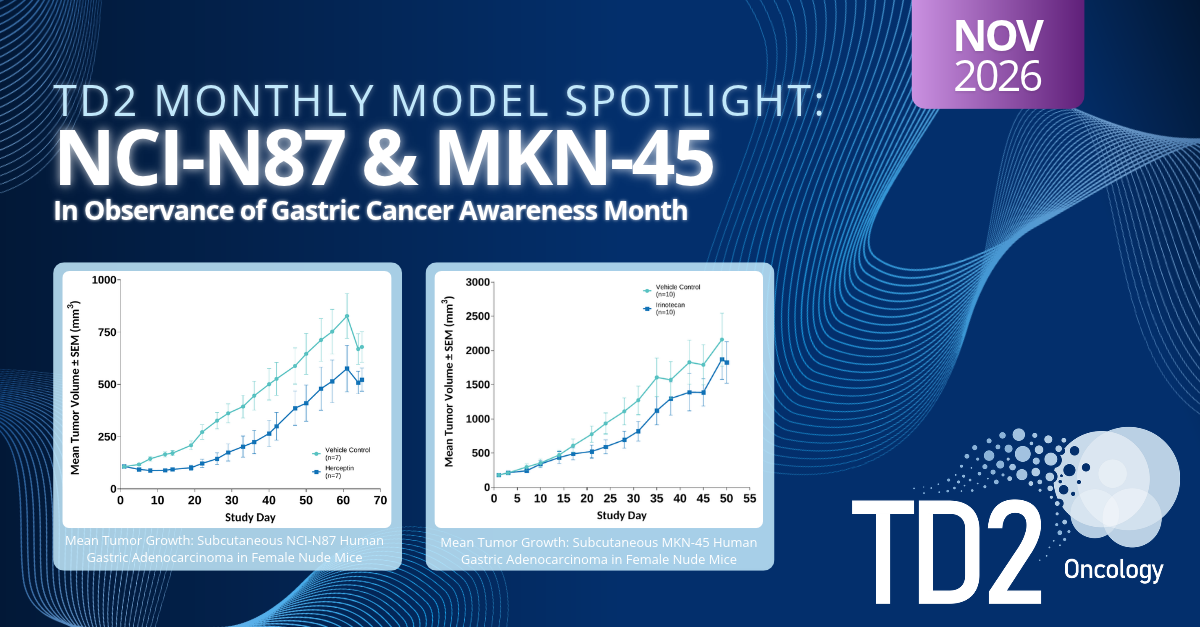
Gastric cancer is the fourth leading cause of cancer-related mortality worldwide. These cancers have limited therapeutic options due to their typical late-stage diagnosis and heterogeneity. Arising primarily from the mucosal lining of the stomach, gastric adenocarcinomas are categorized through both histological and molecular frameworks that guide prognosis and targeted therapy.
Despite recent approvals of targeted therapies and immune checkpoint inhibitors, treatment outcomes remain sub-optimal for patients with metastatic or treatment-refractory disease. The structural complexity and distinct microenvironmental factors of the gastrointestinal tract present unique challenges for therapeutic intervention. Consequently, translational research relies heavily on predictive preclinical models that accurately recapitulate tumor biology, histopathology, and therapeutic response.
Key In Vivo Models in Gastric Cancer Drug Discovery
NCI-N87: A Benchmark Model for HER2-Positive Gastric Cancer
The NCI-N87 cell line is one of the most widely utilized models for targeted gastric cancer research. Derived from a liver metastasis of a well-differentiated human gastric adenocarcinoma, NCI-N87 cells have a HER2 (ERBB2) gene amplification and high surface protein expression.
Because HER2 activation functions as a major oncogenic driver in a significant subset of gastric adenocarcinomas, NCI-N87 provides researchers with a biologically relevant platform for evaluating HER2-directed therapeutics, including monoclonal antibodies, antibody-drug conjugates (ADCs), and small-molecule tyrosine kinase inhibitors.
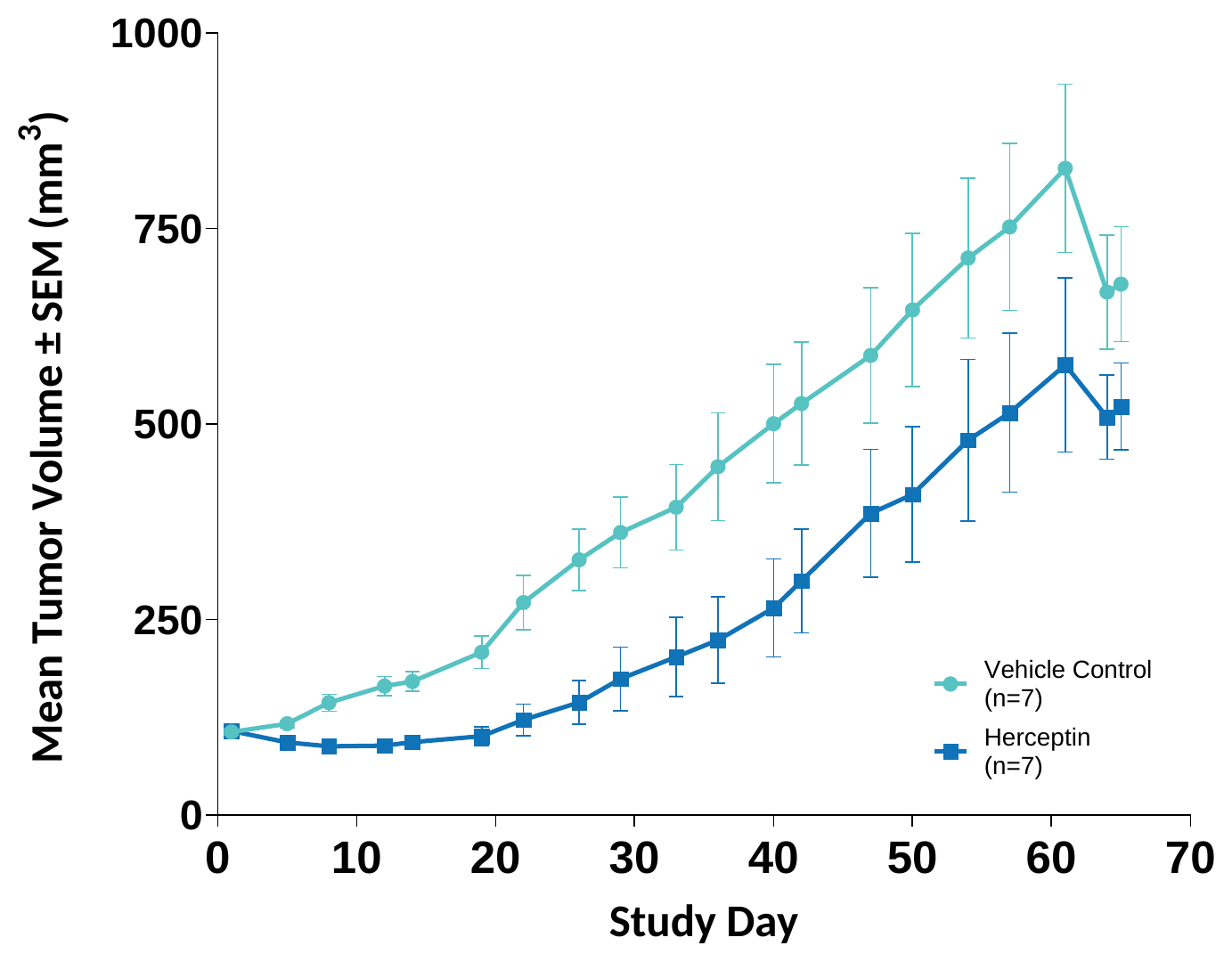
Mean Tumor Growth: Subcutaneous NCI-N87 Human Gastric Adenocarcinoma in Female Nude Mice
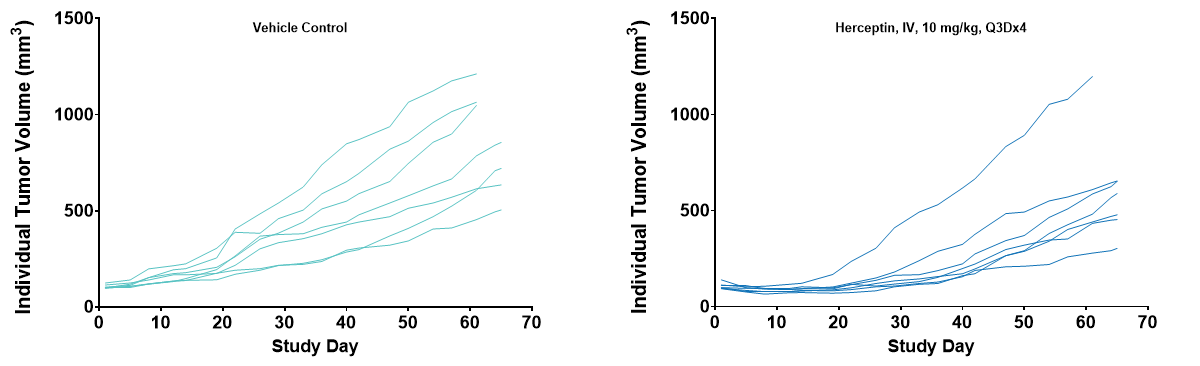
Individual Tumor Growth: Subcutaneous NCI-N87 Human Gastric Adenocarcinoma in Female Nude Mice
MKN-45: A Benchmark Model for MET-Amplified and Poorly Differentiated Gastric Cancer
Among human gastric adenocarcinoma models, MKN-45 occupies a uniquely distinct position due to its molecular profile and genomic drivers. Derived from a poorly differentiated gastric carcinoma, MKN-45 is characterized by high-level MET gene amplification and receptor overexpression.
Because c-MET signaling functions as a critical driver of cell proliferation, invasive behavior, and resistance to standard therapeutics, MKN-45 provides a platform for testing c-MET targeted therapies and strategies designed to overcome drug resistance in non-HER2-driven gastric cancers.
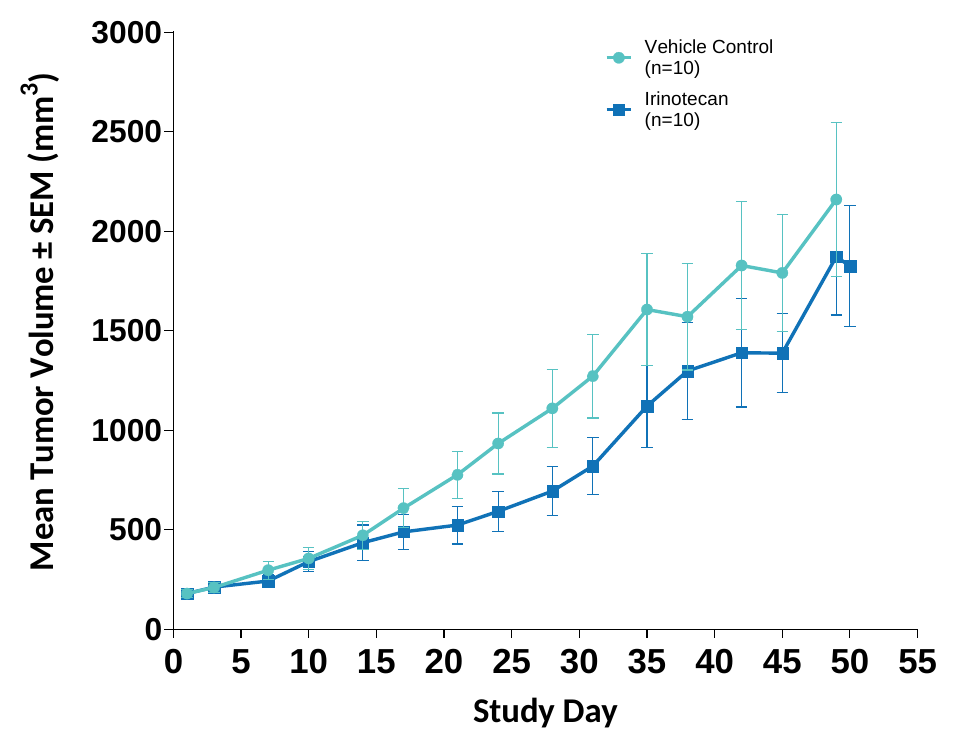
Mean Tumor Growth: Subcutaneous MKN-45 Human Gastric Adenocarcinoma in Female Nude Mice
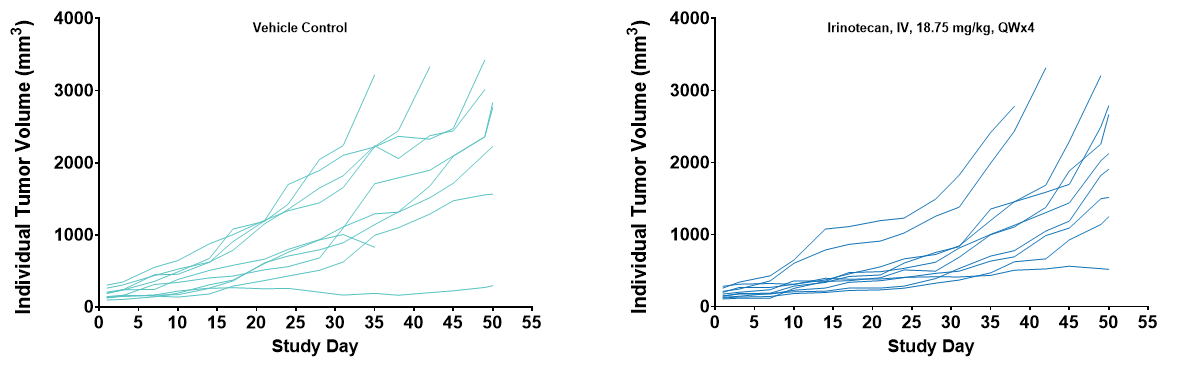
Individual Tumor Growth: Subcutaneous MKN-45 Human Gastric Adenocarcinoma in Female Nude Mice
Future Directions
The next generation of gastric cancer drug discovery is increasingly focused on maximizing the translational power of established in vivo xenograft models by pairing them with cell profiling and spatial transcriptomics. Integrating these analytical readouts into well-characterized in vivo studies provides deeper insights into intratumoral heterogeneity, therapy-induced evolution, and mechanisms of drug activity or resistance.
As precision oncology continues to reshape the treatment landscape, robust in vivo models such as NCI-N87 and MKN-45 remain important tools for translating preclinical discoveries into effective targeted and immunotherapeutic strategies for patients facing gastric cancer.