
Radioligand therapy studies introduce a fundamentally different set of considerations compared to traditional oncology programs, and those differences begin well before first patient dosing. While many sponsors approach radiopharmaceutical development with a familiar oncology mindset, the IND requirements, operational dependencies, and timelines for RLT programs demand earlier alignment and tighter coordination across teams.
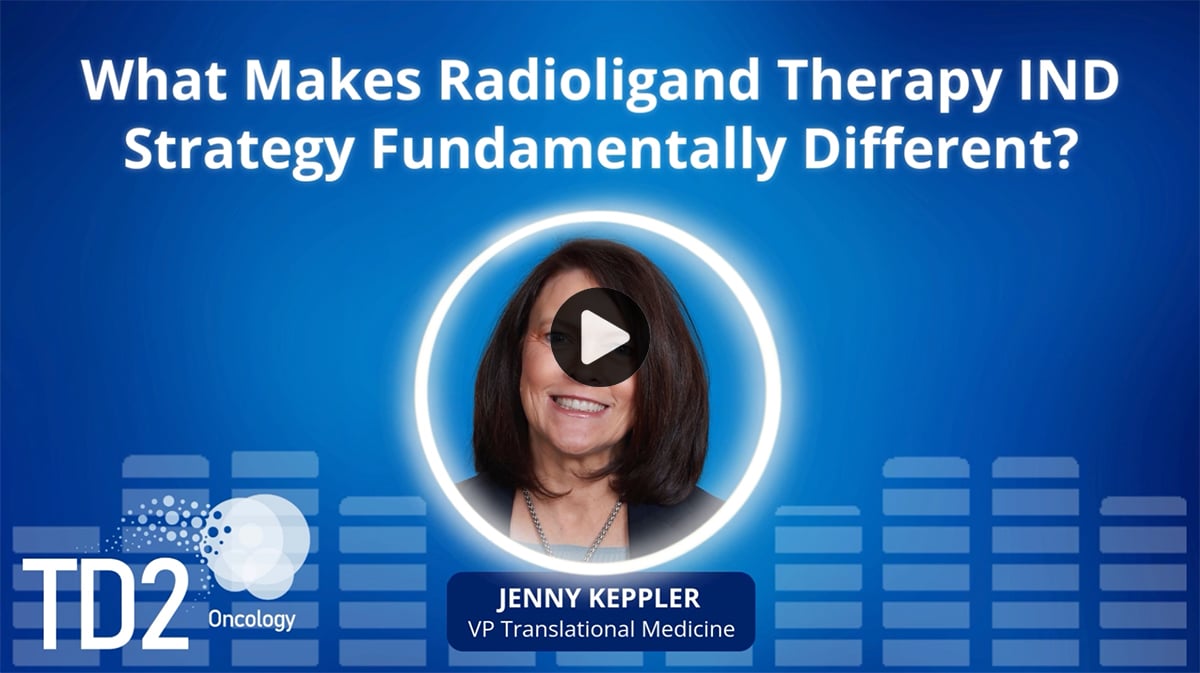
During our recent RLT Fireside Chat on first in human RLT trial planning, Jenny Keppler, VP of Translational Medicine, discussed three themes stood out clearly: the distinct composition of the IND package, the central role of CMC and the CDMO, and the need to involve clinical operations far earlier than most oncology teams expect.
The RLT IND Package Requires a Different Level of Integration
At a high level, the IND for an RLT program contains the same core elements as any oncology IND. However, the complexity lies in how those elements intersect. Unlike small molecules or biologics, radiopharmaceuticals combine a targeting vector, a radioactive isotope, and a highly time sensitive manufacturing and delivery process.
This creates an IND package where CMC is not a supporting section, but a central pillar that influences clinical feasibility, site selection, and dosing logistics. Manufacturing constraints, isotope half-life, batch release timing, and transport all have direct downstream impact on the conduct of the clinical study. As a result, implementing the CMC strategy must be done in parallel to planning for the clinical program , not sequentially.
Sponsors who treat clinical objectives as something to finalize after the manufacturing strategy is set often find the clinical program hindered in implementation, introducing avoidable delays.
CMC and the CDMO Are Core Strategic Partners in RLT
For RLT studies, the CDMO relationship is not simply transactional. It is strategic. The CDMO’s capabilities, infrastructure, geographic location, and experience with radiopharmaceutical production directly shape what is possible in the clinic.
Key questions such as dose preparation timing, batch size, quality control release windows, and shipping radius all affect site feasibility and patient scheduling. These are not theoretical considerations. They determine whether a trial can realistically operate as designed.
Because of this, CDMO engagement and developing a comprehensive CMC strategy that has the ability to scale to subsequent stages of clinical development is critical. The lack of a cohesive strategy set early in development often leads conservative operational decisions that limit enrollment flexibility, or site and trial delays.
Clinical Operations Must Be Engaged Earlier Than Expected
One of the most common missteps in RLT development is delaying clinical operations involvement until the IND is nearly complete and the protocol is finalized. In radiopharmaceutical studies, this timing is too late.
Clinical operations teams play a critical role in assessing site capabilities, nuclear medicine / oncology interface, radiation safety requirements, pharmacy workflows, and patient scheduling constraints. These factors influence protocol design just as much as scientific rationale.
Early coordination allows sponsors to align protocol assumptions with real world site capabilities, identify training or infrastructure gaps, and avoid selecting sites that are technically qualified on paper but operationally constrained in practice.
In successful RLT programs, clinical operations, CMC, regulatory, and manufacturing teams are aligned from the earliest stages of development. This cross functional coordination reduces rework, shortens startup timelines, and improves the likelihood of a smooth first in human experience.
Planning Early Is the Difference Between Speed and Friction
Radioligand therapy programs move quickly once manufacturing and clinical execution are aligned, but they can stall just as quickly when assumptions go untested. The IND phase is the moment to pressure test those assumptions.
Sponsors who invest early in integrated planning across IND strategy, CMC development, CDMO coordination, and clinical operations position their RLT studies for faster startup and more predictable execution.
Radiopharmaceutical development is not simply oncology development with radiation. It is a distinct modality that rewards early alignment over later course corrections.
Continue the Conversation on RLT First in Human Planning
To explore these considerations in more depth, watch the full fireside chat on FIH Clinical Trial Planning for Radiopharmaceuticals, where industry experts share practical insights on navigating IND strategy, CMC complexity, and early clinical alignment.
TD2 Oncology supports radiopharmaceutical programs from IND planning through clinical execution, with integrated expertise across CMC strategy, regulatory guidance, and clinical trial operations. Learn more about our radiopharma services and how we help sponsors plan and execute RLT studies with confidence.